Some physicists and university researchers say it's possible to test the theory that our entire universe exists inside a computer simulation, like in the 1999 film "The Matrix."
Showing posts with label Communication. Show all posts
Saturday, December 15, 2012
Friday, December 14, 2012
Everybody DOES have a twin: Photographer creates amazing portraits of STRANGERS who look the double of each other
At first glance, it's an elegant set of portraits of twins - but look more closely and the secret is revealed.

None of the individuals captured by photographer Francois Brunelle are related by blood, their faces just have strikingly similar characteristics.
Mr Brunelle, who lives in Québec, has studied the human face since he started out as a photographer at the age of 18 in 1968.
The same...but different: Nathaniel (who did not give his last name) and Edward Toledo, pictured in Montreal in 2003, are remarkably similar but not twins
Friday, April 06, 2012
Google Gets Transparent With Glass, Its Augmented Reality Project
Larry Page and Sergey Brin have long had the dream of a hands-free, mobile Google, where search was a seamless process as you moved around the world. As the years progressed the vision did, too, expanding beyond search to persistent connections with the people in your lives.
Wednesday, February 15, 2012
Eisenhower Met With ETs Says Ex-Government Consultant
It's a story that has circulated in and out of the UFO community for years: Did former U.S. President Dwight D. Eisenhower have three meetings with extraterrestrials?
An ex-government consultant says the story is true that the 34th commander in chief chatted, if you will, with aliens at a New Mexico air base, according to reports.
Labels:
Aliens,
Civilization,
Communication,
Conspiracy,
Contact,
History,
Political,
UFO,
USA,
Video
Wednesday, January 11, 2012
Toshiba to ship glasses-free 3D TV to U.S. in early 2012
Toshiba has confirmed to CNET that it plans to make a glasses-free 3D TV available to buyers in the U.S. sometime during the first quarter of 2012.
Saturday, January 07, 2012
Why we fall out of love
“When the moon hits your eye like a big pizza pie, that’s amore!” sang Dean Martin. We all know the delicious feeling of new love, but what about the flip side? Love doesn’t always last, and its retreat can leave us bewildered, confused or downright depressed.
Even if you were raised on a plentiful diet of fairy tales, you know that “till death do us part” can be a rare thing. Even staying with someone forever is no guarantee of experiencing lasting love. But why do people really fall out of love? Is there anything we can do to make love stay? Do some of us give up too easily? To understand the phenomenon of love’s end, we asked the experts’ opinions on the subject. Here are the top three reasons they shared with us:
1. A distancing “Wave” can topple a good thing if you let it. Ken Page, psychotherapist and author of the Finding Love blog for Psychology Today and founder of the Deeper Dating website, has identified a phenomenon that can destroy new love: “The ‘Wave’ occurs when we unconsciously push a caring and available person away by inwardly diminishing his or her worth.” Think about how Carrie Bradshaw behaved when she first started dating Aidan Shaw: Aidan was “too available” and Carrie freaked because she wasn’t used to being with someone so open.Even if you were raised on a plentiful diet of fairy tales, you know that “till death do us part” can be a rare thing. Even staying with someone forever is no guarantee of experiencing lasting love. But why do people really fall out of love? Is there anything we can do to make love stay? Do some of us give up too easily? To understand the phenomenon of love’s end, we asked the experts’ opinions on the subject. Here are the top three reasons they shared with us:
Monday, September 19, 2011
German forest boy is telling the truth, say police
The story of an English–speaking boy who emerged after five years living in a German forest is "credible" and his accent may prove the key to establishing his true identity, German police said.
The boy, 17, told police that his father had died and
he had buried him in a shallow grave in the woods
“His story is highly unusual and raises some questions,” a police spokesman told The Daily Telegraph. “But we believe it is credible – that is why we are investigating.”
The teenager, who gave his name only as Ray, turned up at Berlin’s City Hall on Sept 5 claiming to have been living in the forest with his father for five years.
Sunday, July 31, 2011
Are we alone in the universe?
HAVE you ever looked up at the night sky and wondered if somebody, or something, is looking back? If perhaps somewhere out there, the mysterious spark we call life has flickered into existence?
Intuitively, it feels as if we can't be alone. For every one of the 2000 stars you can see with your naked eye, there are another 50 million in our galaxy, which is one of 100 billion galaxies. In other words, the star we orbit is just one of 10,000 billion billion in the cosmos. Surely there is another blue dot out there - a home to intelligent life like us? The simple fact is, we don't know.
Saturday, September 25, 2010
Colin Andrews: Crop Circles
Part 2
Source
Saturday, August 21, 2010
Can Android Tablets Compete with the iPad?
We’ve rounded up what we know about upcoming Google Android tablets to see if any devices will give the Apple iPad a true rival.
With the success of Apple’s iPad, virtually every manufacturer is brainstorming their own version attempting to ride the tablet wave. Sound familiar? The tablet market seems to be following the path of smartphones, but there is a key difference this time: Apple doesn’t have quite the head start they had back when the first iPhone was released. Android has made a big dent in the mobile industry and it’s looking to do the same for tablets. Apple sold 3 million iPads in the first 80 days and they’re expected to sell around 20 million more in 2011. If Android wants to get its foot in the door then the time is now, before they fall behind again and it takes years to catch up. More and more manufactures are unveiling plans for tablets and the vast majority are choosing Android (sans HP with their Web OS tablet). Below we’ve rounded up everything we know at this point about upcoming Android tablets and when they might hit the market. If there is a tablet we have missed, let us know and we will add it to the list!
Archos 7
The Archos 7 features a 7-inch (800×400) display, 8GB of internal storage along with a micro SDHC slot (for additional storage) and an ARM Cortex A8 processor. The Archos 7 has been available since March and it runs for $199.99.
Cisco Cius
Last month Cisco revealed its plans to join the tablet arms race with the Cius. The Cius will pack a 7-inch screen, a 720p webcam on the front and a 5 megapixel camera on the back. No firm launch date has been set, but Cisco has stated that they’re shooting for early next year.
Velocity Micro Cruz Tablet
Velocity Micro will step away from its luxury gaming throne to dabble in the emerging Android tablet market with the release of their Cruz Tablet this summer. It will feature a 7-inch touch-screen, 4GB of built-in storage, and will accept SD cards for additional storage. The Cruz Tablet will release this summer at a surprisingly low price of $300.
Samsung Galaxy Tab P1000
Samsung unveiled a picture of its upcoming Samsung Galaxy Tab last month and it looks like the iPad’s smaller twin. It will feature a 7-inch AMOLED display, Android 2.2, 16GB of internal storage with a microSD expansion slot, and will be powered by a 1.2GHz A8 processor. The Galaxy Tab is expected to launch sometime this summer and a larger 10-inch tablet from Samsung has been rumored to follow.
Dell Streak
Stewart Wolpin thought the Streak was closer to a large cell phone than a tablet in his hands-on impressions, but it’s being promoted as a tablet so we’ll play along. The streak will feature a 5-inch display, 5 megapixel camera, and integrated social media apps such as Twitter and Facebook. No solid release date has been set for the Streak, but its unlocked price is expected to be $500.
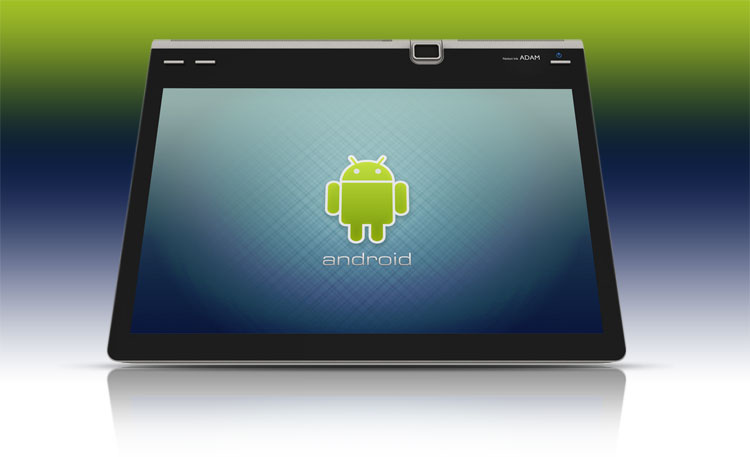
Notion Ink Adam
The Adam will be the first tablet on the market to feature the Pixel Qi display. The 10-inch transflective LCD display offers 3 different modes for viewing including a reflective e-paper mode for low power viewing even in bright sunlight. The Adam is expected to be released in Q3 of this year in selected countries.
ICD Ultra
ICD’s follows up its 15-inch Vega tablet with the ICD Ultra, a smaller Android-based device. The ICD Ultra will feature a 7-inch touchscreen display, a NVIDIA Tegra T20 chipset, and integrated 3G, Wi-Fi, and Bluetooth. Pricing and a final release date have not been set.
Pandigital Novel
The Pandigital Novel can be classified as an eReader but since it features a web browser and media player we think it crosses into tablet territory as well. The Novel will features a 7-inch color 800×600 touchscreen, an SD card slot for adding storage, and will integrate with the Barnes & Noble eBookstore. It will be priced at $199 and is slated to go on sale this month.
NEC Life Touch
The Life touch will feature a 7-inch TFT LCD screen, ARM Cortex A8 processor and 256MB of RAM. The Android 2.1 device is expected to be available in Japan in October with no official price as of this article.
Google Tablet
Details are still scarce on the rumored Google Android Tablet. There have been reports that Verizon and Google are working together on a tablet, but at this point we don’t even know if Google’s Tablet will run on Chrome OS or Android.
Acer Tablet
The Acer tablet looks very similar to its LumiRead e-book reader that was announced at the same event back in may. Not many details have been released but we do know that it will feature a 7-inch color display, will run Android, and has a likely Q4 release date.
LG Tablet
LG announced on July 6th that they will be jumping into the Android tablet market. They didn’t however provide any details on the device, only stating that it plans to release it in the fourth quarter of this year.Source
Friday, August 06, 2010
Project Camelot: Kerry Cassidy interviews Laura Knight
Using a Ouija board (also known as a spirit board) and a small group of people, she made contact and then in a series of controlled experiments verified the level of material she was receiving (whether her source could be trusted) by asking questions then researching the answers and checking on the veracity and intention of the source in predicting future events... In touch with this source for roughly 16 years, she and a small group of people have accumulated a vast amount of information. She has never stopped questioning or researching what she is getting.
Laura's intelligence is tenacious and uncompromising. Her inquiry into the supernatural, past lives, and the unknown has taken her down many roads. Along the way, she became a hypnotist, an exorcist and a highly perceptive chronicler of what it means to be human.
Highly recommended:
Thomas French article "The Exorcist", St. Petersburg Times,
Websites:
Cassiopaean Experiment
Sott.net
Laura's new breathing and meditation video
Monday, August 02, 2010
Quantum Communication
Quantum communication 1/9
Quantum communication 2/9
Quantum communication 3/9
Quantum communication 4/9
Quantum communication 5/9
Quantum communication 6/9
Quantum communication 7/9
Quantum communication 8/9
Quantum communication 9/9
Saturday, July 31, 2010
The Power Of Symbolic Language And UFOs
By Ted Twietmeyer
- I'll first caution you that some of this article may appear to be somewhat abstract in nature. We'll first lay a foundation with known technology, and then show what may become our future of technology.
- Language - can it be defined? We tend to think of it as only a means for communication between humans. By most definitions of language, any given language must have a fixed alphabet or character set.
- For programming computers numerous languages exist. These are not languages that hardware can directly use in most cases. Computer languages function to build a bridge between the hardware realm and human thought. (Most computer software engineers know little or nothing about the microchips on which their software creations run.) These languages are then compiled into machine code which the computer can understand. In the early days, it was first done using giant patch-cord plug boards that "programmed" a simply computer to do simple computations. Later magnetic and paper tape was used, to be followed by disk drives. But I digress a bit here - because computer languages are not our main subject.
- Then there are thousands of spoken and written languages. In almost all cases a fixed alphabet is used. In Chinese, Korean and Japanese each language has more than 1,000 fixed symbols for every object and physical action that existed in the ancient world. These symbols were rigidly defined for each language.
- For example, back in the late 1980s I looked at a datasheet for a first generation gate array microchip. The datasheet for the chip they wanted to use was to me from Japan faxed (pre-internet days) and consisted of both Japanese and English symbols. For example, nanoseconds did not have a symbol in Japanese, and the standard abbreviation used in the west for nanoseconds is "ns." This appeared on the datasheet.
A typical circuit board found in all electronic products today [1] - The circuit board example shown above is the result of hundreds of hours of electrical engineering work. This circuit board can only be designed and fabricated after all the electronic circuit design is completed. The silver dots (solder) you see which connect copper conductors (shown as light green lines above) to other components and conductors on the other side of the board, or to similar conductors INSIDE the board.
- It might not seem to make sense now, but keep this image in mind as later we will be using this example which is why it is shown here.
- A NEW WAY TO LOOK AT TECHNOLOGY
- Now we will surpass known technology and plunge into the unknown. None of this is currently being taught by any of our institutions of higher learning.
- We will leave the comfort of a known 26 letter alphabet world and enter a different one. Suppose that there wasn't any limit to an alphabet for a given language? Imagine a language where you could create an infinite number of characters at will!
- For now, let's assume we could design a circuit without discrete components and without soldering. It would require totally new materials technology and an entire new methodology of thinking about solving design problems. Without doubt, this would require us to use ALL of our brain - instead of just 10%.
- There are numerous accounts of "strange materials" which UFOs appear to be constructed of. Are these nano-materials, living materials or something else that can partially exist in our dimension and another one? It may or may not be possible to replicate these materials with raw materials found on Earth.
- UFOs often have writing on them. But is it writing or something else? When we look at a printed letters on a paper, no thought is given as to what the ink composition is. When we see what appears to be "letters" on a UFO object, we AUTOMATICALLY think these are letters, too. If we look at this from a scientific viewpoint, we cannot assume anything to be fact until it's proven. Theories must come first, and then be supported by experimental proof. With UFOs there is by design a serious lack of evidence. Yet there is no lack of witnesses.
- Fig. 1 - One of two antigravity generators claimed to be removed from an alien vehicle. Click
to zoom [1]
- The above object shows unusual symbols on numerous facets. (See reference [1] for full size image.) It is not known for certain if this object is authentic. There are at least three possibilities for releasing this image and the associated text for it:
- 1.. This is a real object, and the man using the name Isaac is sincere in his reasons for releasing it. Why he is solely using a talk radio show for this is odd.
- 2.. The image release is being used as a means to USE the public to decode what the symbols mean. This would also mean that those who have possession of the images and information will be carefully watched and under surveillance. If true, this indicates that government experts are stumped. This is similar to the plot of the film "Mercury Rising" where a puzzle was placed in a puzzle book, to see if someone could crack it. In other words, this image is another black op.
- 3.. This object is a simple CGI hoax that gives someone a thrill to claim it's real.
- Text that appears with this object on a website claims that through reverse engineering, it was discovered that these symbols form a circuit pattern which "programs" this object to perform the intended function. It is claimed that even supercomputers in the 1980's had difficulty composing the symbols. The two separate, I-beam like curved parts shown above are supposedly the "controls" for operating the device.
Fig. 2 - Kecksburg acorn-shaped UFO replica. [2] - On the Kecksburg Pennsylvania UFO, symbols were seen around the base of the object by witnesses before it was spirited away by military personnel. There has been a theory that the symbols were Russian, by these are not the Cyrillic language by any stretch of the imagination.
- Are these symbols merely identifying marks of ownership - or are they a circuit pattern for an unknown type providing the propulsion function? If these symbols are part of the propulsion system's operation, then damaging just one of these symbols by a small space rock might have been the cause of the crash. A coating could be devised to protect the symbols, but perhaps the material in the symbols MUST be exposed to space for them to work. This cannot be ruled out until proven otherwise. A solar panel could be protected in space from meteors simply by mounting a thick steel plate over it. Of course, it would no longer function.
Fig. 3 - Roswell I-beam. This doesn't look like Christmas wrapping tape. [3] - If the above symbols are required for this object to function in the Roswell vehicle, it would explain why an alien race would go to the trouble to put markings on such a small part (note the person's fingers holding the object.) It's interesting to note that this basic I-beam shape is similar to that in Fig. 1, though this is a straight I-beam shape while the two objects in Fig. 1 are curved. Perhaps there is a specific reason for the basic I-beam shape. One common characteristic of an I-beam is symmetry.
- If you were to disassemble the door on your car or truck you wouldn't find any detailed writing inside. An action performed by intelligent life from bacterium to higher life-forms throughout the universe has a purpose, even if we cannot recognize the purpose or function.
- Prior to the early 1900's, a rectangular pipe was virtually unheard of and no useful purpose. However, radar changed all that and rectangular "pipes" made to precise tolerances were used to route microwave frequencies to and from radar dishes. In fact, there is a rectangular waveguide inside the cabinet of microwave ovens, too.
Fig. 4 - Rendlesham forest UFO symbols - this was drawn by an airman who also touched it. He claimed it was warm, smooth as glass and changed colors. [4] - Are these symbols part of a functional circuit which we cannot understand with our technology at this time, or simply a message to us like the Voyager golden record? Or perhaps this a label identifying who owns it? If it was a message from another race, then why didn't the vehicle leave it behind before taking off? These abstract symbols tend to remind one of the symbols placed on the Voyager spacecraft, which was launched in 1976.
Fig. 5 - Voyager spacecraft golden record [5] - In Fig. 5, we know these symbols have no functional purpose or play a part in spacecraft operation. Both Voyager spacecraft with this record have left the solar system. These two spacecraft continue to function well and still transmit images 31 years later.
- CONCLUSION
- Nanotechnology has created some amazing materials which perform on the microscopic scale. Materials technology has advanced considerably since the 1980s, which is when the picture in Fig. 1 was supposedly taken. Slowly our understanding of the strange quantum world is expanding from pure theory to experimental results. The most advanced of these results will never see the light of day for military reasons.
- A popular and highly conservative magazine "Nature" is read by many scientists today. Some scientists consider it a crowning achievement to be published in that magazine. In that magazine, it was announced a few years ago that negative optical materials were being developed. These materials work exactly the opposite of glass and plastic. For example, a sheet of flat negative optical material acts like a lens to light while curved negative optical material does nothing. A negative optical material mirror will not reverse a reflection like a regular mirror does. If someone were to talk about material like this 10 years ago, they would be laughed at as a crank.
- Materials technology could conceivably advance such that complex symbols printed on the surface will cause a specific function to take place. To accomplish this will require the work of those who are not afraid to think outside the box of today's science.
- Ted Twietmeyer
- www.bookonmars.info
- www.data4science.net
- IMAGE SOURCES
- [1] http://isaaccaret.fortunecity.com/pacl-q486-photo-1-fullsize.jpg
- [2] http://www.kecksburgvfd.com/images/im001895_y7s7.jpg
- [3] http://trowbridgeplanetearth.com/ALI/graphics/IBeam.gif
- [4] http://www.nickpope.net/photo.htm
- [5] http://voyager.jpl.nasa.gov/spacecraft/goldenrec.html
Monday, July 19, 2010
Sunday, July 18, 2010
Royal astronomer: 'Aliens may be staring us in the face'
Invisible Extraterrestrials? World-Leading Physicist Says
"They Could Exist in Forms We Can't Conceive"
Aliens may be 'staring us in the face' according to Lord Martin Rees,
the president of the Royal Society
The intriguing remark was made by Lord Martin Rees, a leading cosmologist and astrophysicist who is the president of Britain’s Royal Society and astronomer to the Queen of England. Rees, who last month hosted the National Science Academy’s first conference on the possibility of alien life, said he believes the existence of extra terrestrial life may be beyond human understanding.
“They could be staring us in the face and we just don’t recognize them. The problem is that we’re looking for something very much like us, assuming that they at least have something like the same mathematics and technology."
“I suspect there could be life and intelligence out there in forms we can’t conceive. Just as a chimpanzee can’t understand quantum theory, it could be there as aspects of reality that are beyond the capacity of our brains.”
During the conference entitled ‘The Detection of Extra-terrestrial Life and the Consequences for Science and Society’, Rees asked whether the discovery of aliens would cause terror or delight on earth, the Telegraph reported.
However, Frank Drake, the founder of SETI and Drake's Equation, told the conference that satellite TV and the “digital revolution” was making humanity invisible to aliens by cutting the transmission of TV and radio signals into space. The earth is currently surrounded by a 50 light year-wide “shell” of radiation from analogue TV, radio and radar transmissions. According to Drake, digital TV signals would look like white noise to a race of observing aliens.
Although the signals have spread far enough to reach many nearby star systems, they are rapidly vanishing in the wake of digital technology, said Drake. In the 1960s, Drake spearheaded the conversion of the Arecibo Observatory to a radio astronomy center. As a researcher, Drake was involved in the early work on pulsars. Drake also designed the Pioneer plaque with Carl Sagan in 1972, the first physical message sent into space. The plaque was designed to be understandable by extraterrestrials should they encounter it.
Milan Cirkovic of the Astronomical Observatory in Belgrade, points out that the median age of terrestrial planets in the Milky Way is about 1.8 gigayears (one billion years) greater than the age of the Earth and the Solar System, which means that the median age of technological civilizations should be greater than the age of human civilization by the same amount. The vastness of this interval indicates that one or more processes must suppress observability of extraterrestrial communities.
Since at this point, there is no direct and/or widely apparent evidence that extraterrestrial life exists, it likely means one of the following:
We are (A) the first intelligent beings ever to become capable of making our presence known, and leaving our planet. At this point, there are no other life forms out there as advanced as us. Or perhaps extraterrestrial life does exists, but for some reason extraterrestrial life is so very rare and so very far away we’ll never make contact anyway—making extraterrestrial life nonexistent in a practical sense at least.
Or is it (B) that many advanced civilizations have existed before us, but without exception, they have for some unknown reason, existed and/or expanded in such a way that they are completely undetectable by our instruments.
Or is it (C) There have been others, but they have all run into some sort of “cosmic roadblock” that eventually destroys them, or at least prevents their expansion beyond a small area.
Since Earth’s placement in space and time appears to be unremarkably random, proposition “A” seems fairly unlikely. Assuming humans evolved like other forms of life into our present state due to natural selection, then there's really nothing all that mystical, special or remarkable about our development as a species either. Due to the shear numbers, there are almost certainly other planets capable of supporting at least some form of life. If that is so, then for Earthlings to be the very first species ever to make a noticeable mark on the universe, from a statistical perspective, is incredibly unlikely.
For proposition “B” to be correct would defy all logic. If potentially thousands, or even millions of advanced extraterrestrial civilizations exist in the known universe, then why would all of them, without exception, choose to expand or exist in such a way that they are completely undetectable? It’s conceivable that some might, or perhaps even the majority, but for all of them to be completely undetectable civilizations does not seem likely either.
Proposition C in some ways, appears to be more likely than A or B. If “survival of the fittest” follows similar pathways on other worlds, then our own “civilized” nature could be somewhat typical of extraterrestrial civilizations that have, or do, exist. Somehow, we all get to the point where we end up killing ourselves in a natural course of technological development and thereby self-inflict our own “cosmic roadblock”.
SourceSunday, July 11, 2010
Out in the Silence
Love, hate and a quest for change in small town America.
Source
Labels:
Civilization,
Communication,
Freedom,
Homosexuality,
Religion,
Sex,
Society,
Video
Thursday, June 24, 2010
Apple iPhone 4: Full review
It’s guaranteed to be a big seller,
but is Apple’s newest iPhone a must-have?
The new iPhone 4 features a new glass and aluminium chassis and has one
of the sharpest smartphone screens we've ever seen. Photo: APPLE
In the three years since the first iPhone went on sale, the mobile landscape has changed irrevocably. Most phones now offer apps, internet browsing, social-networking widgets and email, while the higher-end smart phones continue to innovate around speed, features and build quality. That means Apple has an increasingly difficult job on its hands; responding to the innovations of the chasing pack while turning out a new handset every year.
The iPhone 4 is this year’s effort, and overall, it’s a corker. Not everyone will be a fan of the iPhone’s new industrial look and feel, which has done away with the shapely, curved edges of the iPhone 3G and 3GS in favour of a more functional, practical design. But I think iPhone 4 feels like a truly premium product, on a par with expensive designer handsets such as those made by Vertu.
It’s slimmer than its predecessors, and now features a glass shell made from the same super-strong aluminosilicate material used for helicopter windscreens, which makes it tough and scratch-resistant. The stainless steel band that runs around the middle of the iPhone, like the buttercream filling in a particularly delicious Victoria sponge, not only helps strengthen the overall construction, but is also part of the iPhone’s cellular and Wi-Fi antennas.
The difference in screen quality between iPhone 4 and previous models is acute. The new iPhone’s special “retina display” has four times the resolution of the iPhone 3GS, and Apple claims the pixels are so small that they can’t be detected by the human eye. That means that icons, text and pictures are pin-sharp on iPhone 4, with crisp, defined edges. Colours are luscious and seem to pop out of the screen, while whites appear brighter, and blacks take on a deep, inky hue. In short, it’s the kind of screen performance you’d expect from an AMOLED display, but Apple has somehow managed it with a simple backlit LCD screen. Where this display really comes in to its own – more than with photos, more than with movies, more, even than with web pages – is with ebooks. The iPhone 4 supports iBooks, Apple’s own ebook reader software, and the pages of Winnie the Pooh are rendered with a clarity and precision you simply do not find on any other device, not even an iPad.
There are plenty of other hardware improvements, too, including a five-megapixel camera with LED flash that’s capable of taking some great shots in lowlight conditions. And the iPhone 4 can also capture high-definition 720p video at 30 frames per second. The makers of the Flip range of camcorders should be very worried indeed; videos shot on the iPhone 4 look fantastic, with good colour balance, while a version of iMovie for the iPhone makes it incredibly easy to edit clips using the iPhone and create a pleasing, professional video ready for sharing. The new A4 processor ensures everything zips along, and the bigger battery makes a world of difference – not once, in the time that I have been testing the iPhone 4, have I had to give it a lunchtime boost.
The improved battery life and nippier performance prove crucial for one of iPhone 4’s most hotly-anticipated features – multitasking. It’s worth noting that it’s not really multitasking in the strictest sense, because not every app will be able to work fully in the background; Apple is allowing some apps, such as music-streaming services, to continue playing while users open other applications, but true multitasking is restricted because of the potentially catastrophic impact on battery life. So that means that Twitter and Facebook, for instance, do not continue pulling down real-time updates even as you work on an email or browse a web page. Instead, they are “paused” when you switch between apps; if you return to an app, you can pick up exactly where you left off.
Multitasking is not just restricted to iPhone 4 – it’s part of the iOS4 software update available to existing iPhone 3GS users. The new operating system brings some welcome new features to the iPhone range, including the ability to organise apps in to “folders”. You can have a maximum of 12 apps in a single folder, which means some apps, such as games, may have to be subdivided by genre (puzzle, shooter etc). Annoyingly, all of the folders look the same on the iPhone’s Home screen – you can’t choose an app logo to represent the whole folder, so there’s a lot of squinting at the screen while you try to see which folder is which.
One feature of iPhone 4 that Apple has been pushing hard is FaceTime, its video-calling app. The iPhone 4 has a front-facing VGA camera, which can be used to make video calls to other iPhone 4 users over a Wi-Fi network. Video calling has never really taken off in Europe, mainly because it offered such an awful user experience, but FaceTime really is dramatically different. It’s easy to use, for starters – you can start with a FaceTime call, or switch to FaceTime midway through a conversation, at the touch of a button. The iPhone 4’s top-notch screen provides a really clear picture, while its dual microphones and noise-cancelling capabilities ensure good audio that remains in sync with the video. It’s a shame the service is restricted to iPhone 4 users and that it works only on Wi-Fi, though Apple hopes that will change in time. It’s also giving away its FaceTime technology to other mobile phone makers, which could really help to increase uptake of this solid video-calling app.
The iPhone 4 has its flaws. I wish the Home screen had a different look and feel that tied in with the device’s new industrial design; perhaps something more akin to the user interface on Microsoft’s forthcoming range of Windows Phone 7 handsets. And it would also be great if it supported “widgets”, so that I could see, at a glance, what my most recent email or text message is, a real-time weather forecast for my locale, or even the latest stock prices.
But overall, the iPhone 4 is an excellent, beautifully built device that cements Apple’s position as the leading smartphone maker. Upgrading to iPhone 4 won’t come cheap, though – buying the handset SIM-free from Apple will cost at least £499, and you’re still looking at a substantial outlay on the handset if you buy it on contract from a network operator. If you own an iPhone 3G, or are simply in the market for a new phone, then upgrading to iPhone 4 is a no-brainer. But if you’ve got an iPhone 3GS and are still in contract, don’t rush to upgrade; instead, install the new iOS4 update on your handset and put the new software through its paces.
After all, this time next year, Apple will have a new handset for us to drool over
SourceIt’s slimmer than its predecessors, and now features a glass shell made from the same super-strong aluminosilicate material used for helicopter windscreens, which makes it tough and scratch-resistant. The stainless steel band that runs around the middle of the iPhone, like the buttercream filling in a particularly delicious Victoria sponge, not only helps strengthen the overall construction, but is also part of the iPhone’s cellular and Wi-Fi antennas.
The difference in screen quality between iPhone 4 and previous models is acute. The new iPhone’s special “retina display” has four times the resolution of the iPhone 3GS, and Apple claims the pixels are so small that they can’t be detected by the human eye. That means that icons, text and pictures are pin-sharp on iPhone 4, with crisp, defined edges. Colours are luscious and seem to pop out of the screen, while whites appear brighter, and blacks take on a deep, inky hue. In short, it’s the kind of screen performance you’d expect from an AMOLED display, but Apple has somehow managed it with a simple backlit LCD screen. Where this display really comes in to its own – more than with photos, more than with movies, more, even than with web pages – is with ebooks. The iPhone 4 supports iBooks, Apple’s own ebook reader software, and the pages of Winnie the Pooh are rendered with a clarity and precision you simply do not find on any other device, not even an iPad.
There are plenty of other hardware improvements, too, including a five-megapixel camera with LED flash that’s capable of taking some great shots in lowlight conditions. And the iPhone 4 can also capture high-definition 720p video at 30 frames per second. The makers of the Flip range of camcorders should be very worried indeed; videos shot on the iPhone 4 look fantastic, with good colour balance, while a version of iMovie for the iPhone makes it incredibly easy to edit clips using the iPhone and create a pleasing, professional video ready for sharing. The new A4 processor ensures everything zips along, and the bigger battery makes a world of difference – not once, in the time that I have been testing the iPhone 4, have I had to give it a lunchtime boost.
The improved battery life and nippier performance prove crucial for one of iPhone 4’s most hotly-anticipated features – multitasking. It’s worth noting that it’s not really multitasking in the strictest sense, because not every app will be able to work fully in the background; Apple is allowing some apps, such as music-streaming services, to continue playing while users open other applications, but true multitasking is restricted because of the potentially catastrophic impact on battery life. So that means that Twitter and Facebook, for instance, do not continue pulling down real-time updates even as you work on an email or browse a web page. Instead, they are “paused” when you switch between apps; if you return to an app, you can pick up exactly where you left off.
Multitasking is not just restricted to iPhone 4 – it’s part of the iOS4 software update available to existing iPhone 3GS users. The new operating system brings some welcome new features to the iPhone range, including the ability to organise apps in to “folders”. You can have a maximum of 12 apps in a single folder, which means some apps, such as games, may have to be subdivided by genre (puzzle, shooter etc). Annoyingly, all of the folders look the same on the iPhone’s Home screen – you can’t choose an app logo to represent the whole folder, so there’s a lot of squinting at the screen while you try to see which folder is which.
One feature of iPhone 4 that Apple has been pushing hard is FaceTime, its video-calling app. The iPhone 4 has a front-facing VGA camera, which can be used to make video calls to other iPhone 4 users over a Wi-Fi network. Video calling has never really taken off in Europe, mainly because it offered such an awful user experience, but FaceTime really is dramatically different. It’s easy to use, for starters – you can start with a FaceTime call, or switch to FaceTime midway through a conversation, at the touch of a button. The iPhone 4’s top-notch screen provides a really clear picture, while its dual microphones and noise-cancelling capabilities ensure good audio that remains in sync with the video. It’s a shame the service is restricted to iPhone 4 users and that it works only on Wi-Fi, though Apple hopes that will change in time. It’s also giving away its FaceTime technology to other mobile phone makers, which could really help to increase uptake of this solid video-calling app.
The iPhone 4 has its flaws. I wish the Home screen had a different look and feel that tied in with the device’s new industrial design; perhaps something more akin to the user interface on Microsoft’s forthcoming range of Windows Phone 7 handsets. And it would also be great if it supported “widgets”, so that I could see, at a glance, what my most recent email or text message is, a real-time weather forecast for my locale, or even the latest stock prices.
But overall, the iPhone 4 is an excellent, beautifully built device that cements Apple’s position as the leading smartphone maker. Upgrading to iPhone 4 won’t come cheap, though – buying the handset SIM-free from Apple will cost at least £499, and you’re still looking at a substantial outlay on the handset if you buy it on contract from a network operator. If you own an iPhone 3G, or are simply in the market for a new phone, then upgrading to iPhone 4 is a no-brainer. But if you’ve got an iPhone 3GS and are still in contract, don’t rush to upgrade; instead, install the new iOS4 update on your handset and put the new software through its paces.
After all, this time next year, Apple will have a new handset for us to drool over
Friday, June 11, 2010
Danny Dyer: I Believe in UFOs (2010)
Labels:
Alien Engineering,
Alien Technology,
Aliens,
Civilization,
Communication,
UFO,
Universe,
Video
Subscribe to:
Posts (Atom)