
Wednesday, April 08, 2009


Saturday, April 04, 2009
What would it look like to fall into a black hole?
21:46 01 April 2009 by
Stephen Battersby
Video:
Falling into a black hole would be a one-off sightseeing trip, so this simulation,
calculated by Andrew Hamilton and his team at the
University of Colorado,Boulder, is a safer option
Falling into a black hole might not be good for your health,
but at least the view would be fine. A new simulation shows what you might see
on your way towards the black hole's crushing central singularity. The research
could help physicists understand the apparently paradoxical fate of matter and
energy in a black hole.
Andrew Hamilton and Gavin Polhemus of the University of Colorado, Boulder,
built a computer code based on the equations of Einstein's general theory of relativity,
which describes gravity as a distortion of space and time.
They follow the fate of an imaginary observer on an orbit that swoops down
into a giant black hole weighing 5 million times the mass of the sun, about
the same size as the hole in the centre of our galaxy.
As you approach, a dark circle is bitten out of the galaxy containing the
black hole, marking the event horizon – the point beyond which nothing can
escape the black hole's grip. Light from stars directly behind the hole is
swallowed by the horizon, while light from other stars is merely bent by the
black hole's gravity, forming a warped image around the hole.
Horizontal ring
To distant observers, the horizon has a size of one Schwartzschild radius
– about 15 million kilometres for this hole – but as you approach, it recedes
from you. Even after you cross this radius, there is still a point in front
of you where all light is swallowed, so from your point of view, you never
reach the horizon.
Hamilton and Polhemus have painted a red grid on the horizon to help visualise
it (as the horizon is spherical, the two circles on the grid represent the
north and south "poles" of its central black hole). And as you pass one Schwartzschild
radius, another artificial visual aid pops up. The white grid that loops around
you marks where distant observers would place the horizon – this is where
you'd see other people falling in if they followed you through the horizon.
The strangest sight is reserved for your last moments. So close to the
centre of the black hole, you feel powerful tidal forces. If you're falling
in feet first, gravity at your head is much weaker than at your feet. That
would pull a real observer apart, and it also affects the light falling in
around you - light from above your head is stretched out and shifted to the
red end of the spectrum. Eventually it gets red-shifted into nothingness,
so your whole view will be squeezed into a horizontal ring.
Information paradox
This process might shed some light on a black hole puzzle. Quantum calculations
seem to show that there is too much complexity within a black hole - in earlier
work, the researchers calculated that it should be possible to create much
more entropy (a measure of disorder) inside the black hole than is measured
by outside observers.This is like a supercharged version of the
old black hole information paradox, which pits the apparent destruction of
objects - and information - that falls into a black hole against quantum mechanics,
which states that quantum information can never be lost.The problem may
be that we have a naive view of space, which breaks down
inside the black hole. To calculate total entropy, Hamilton and Polhemus assumed
that you add up all the possible states that matter and energy could take
at different points in space. But along with other theorists, they suspect
that this usual assumption, called locality, doesn't work inside a black hole.
Somehow, different points in space seem to share the same states - but it's
not clear how.That's where visualisations like this might just help. "Close
to the singularity, it appears that the entire three-dimensional universe is
being crushed into a two-dimensional surface," says Hamilton
(see Our world may be a giant hologram). But whether it hints that a
2D view is more fundamental is not yet clear. "Does it have any profound significance?
I don't know," says Hamilton.
Sunday, March 29, 2009
Sunday, March 22, 2009

Thursday, March 12, 2009
Secret – Eyes Only A video interview with "Mr X", a former UFO archivist Landers, California, May 2006 "Mr X"
No Doomsday in 2012
Written by Ian O'Neill

Apparently, the world is going to end on December 21st, 2012. Yes, you read correctly, in some way, shape or form, the Earth (or at least a large portion of humans on the planet) will cease to exist. Stop planning your careers, don't bother buying a house, and be sure to spend the last years of your life doing something you always wanted to do but never had the time. Now you have the time, four years of time, to enjoy yourselves before… the end.
So what is all this crazy talk? We've all heard these doomsday predictions before, we're still here, and the planet is still here, why is 2012 so important? Well, the Mayan calendar stops at the end of the year 2012, churning up all sorts of religious, scientific, astrological and historic reasons why this calendar foretells the end of life as we know it. The Mayan Prophecy is gaining strength and appears to be worrying people in all areas of society. Forget Nostradamus, forget the Y2K bug, forget the credit crunch, this event is predicted to be huge and many wholeheartedly believe this is going to happen for real.
For all those 2012 Mayan Prophecy believers out there, I have bad news. There is going to be no doomsday event in 2012, and here's why…
The Mayan Calendar
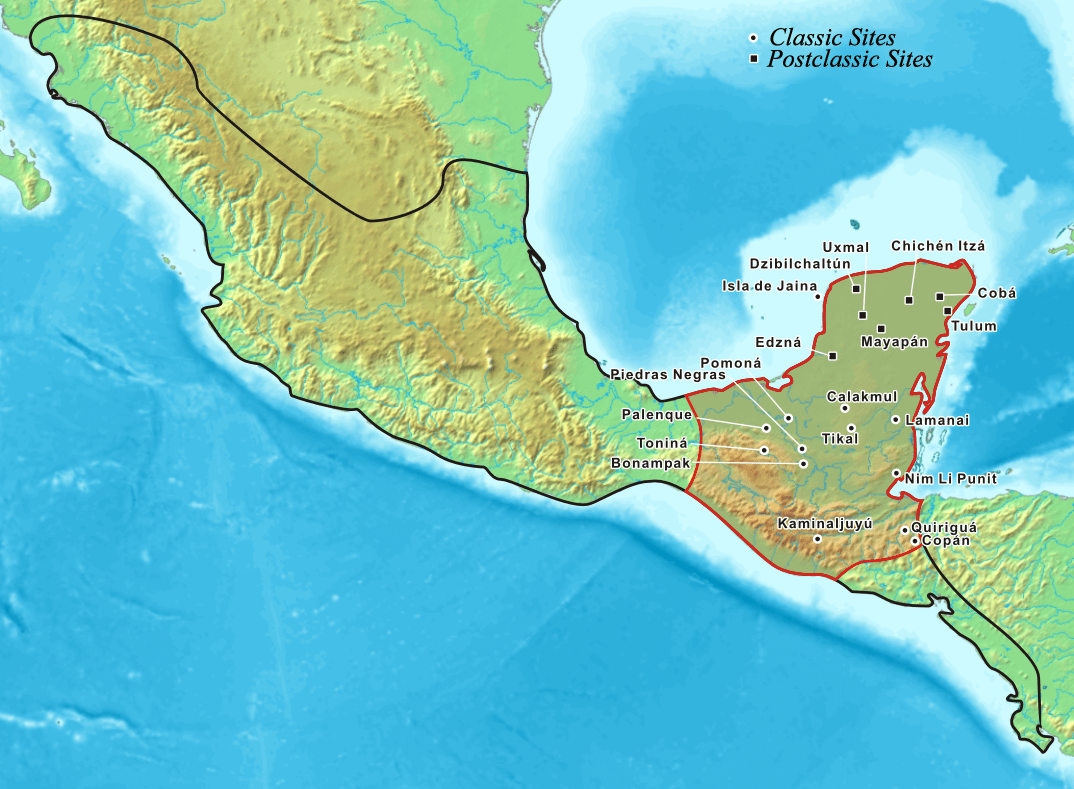
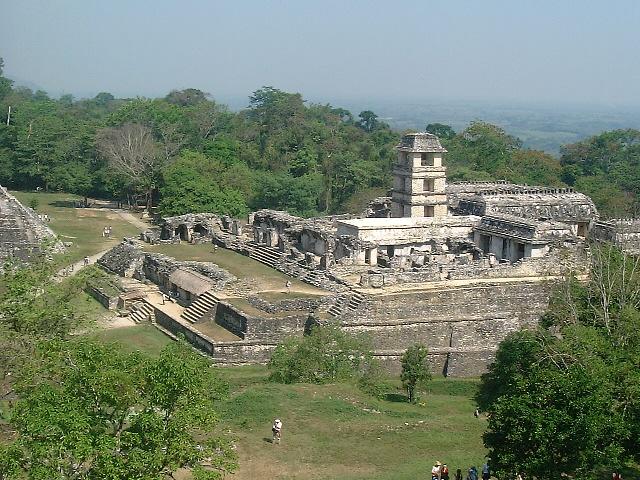
So what is the Mayan Calendar? The calendar was constructed by an advanced civilization called the Mayans around 250-900 AD. Evidence for the Maya empire stretches around most parts of the southern states of Mexico and reaches down to the current geological locations of Guatemala, Belize, El Salvador and some of Honduras. The people living in Mayan society exhibited very advanced written skills and had an amazing ability when constructing cities and urban planning. The Mayans are probably most famous for their pyramids and other intricate and grand buildings. The people of Maya had a huge impact on Central American culture, not just within their civilization, but with other indigenous populations in the region. Significant numbers of Mayans still live today, continuing their age-old traditions.
The Mayans used many different calendars and viewed time as a meshing of spiritual cycles. While the calendars had practical uses, such as social, agricultural, commercial and administrative tasks, there was a very heavy religious element. Each day had a patron spirit, signifying that each day had specific use. This contrasts greatly with our modern Gregorian calendar which primarily sets the administrative, social and economic dates.
Most of the Mayan calendars were short. The Tzolk'in calendar lasted for 260 days and the Haab' approximated the solar year of 365 days. The Mayans then combined both the Tzolk'in and the Haab' to form the "Calendar Round", a cycle lasting 52 Haab's (around 52 years, or the approximate length of a generation). Within the Calendar Round were the trecena (13 day cycle) and the veintena (20 day cycle). Obviously, this system would only be of use when considering the 18,980 unique days over the course of 52 years. In addition to these systems, the Mayans also had the "Venus Cycle". Being keen and highly accurate astronomers they formed a calendar based on the location of Venus in the night sky. It's also possible they did the same with the other planets in the Solar System.
Using the Calendar Round is great if you simply wanted to remember the date of your birthday or significant religious periods, but what about recording history? There was no way to record a date older than 52 years.
The end of the Long Count = the end of the Earth?
The Mayans had a solution. Using an innovative method, they were able to expand on the 52 year Calendar Round. Up to this point, the Mayan Calendar may have sounded a little archaic - after all, it was possibly based on religious belief, the menstrual cycle, mathematical calculations using the numbers 13 and 20 as the base units and a heavy mix of astrological myth. The only principal correlation with the modern calendar is the Haab' that recognised there were 365 days in one solar year (it's not clear whether the Mayans accounted for leap years). The answer to a longer calendar could be found in the "Long Count", a calendar lasting 5126 years.
I'm personally very impressed with this dating system. For starters, it is numerically predictable and it can accurately pinpoint historical dates. However, it depends on a base unit of 20 (where modern calendars use a base unit of 10). So how does this work?
The base year for the Mayan Long Count starts at "0.0.0.0.0". Each zero goes from 0-19 and each represent a tally of Mayan days. So, for example, the first day in the Long Count is denoted as 0.0.0.0.1. On the 19th day we'll have 0.0.0.0.19, on the 20th day it goes up one level and we'll have 0.0.0.1.0. This count continues until 0.0.1.0.0 (about one year), 0.1.0.0.0 (about 20 years) and 1.0.0.0.0 (about 400 years). Therefore, if I pick an arbitrary date of 2.10.12.7.1, this represents the Mayan date of approximately 1012 years, 7 months and 1 day.
This is all very interesting, but what has this got to do with the end of the world? The Mayan Prophecy is wholly based on the assumption that something bad is going to happen when the Mayan Long Count calendar runs out. Experts are divided as to when the Long Count ends, but as the Maya used the numbers of 13 and 20 at the root of their numerical systems, the last day could occur on 13.0.0.0.0. When does this happen? Well, 13.0.0.0.0 represents 5126 years and the Long Count started on 0.0.0.0.0, which corresponds to the modern date of August 11th 3114 BC. Have you seen the problem yet? The Mayan Long Count ends 5126 years later on December 21st, 2012.
Doomsday
When something ends (even something as innocent as an ancient calendar), people seem to think up the most extreme possibilities for the end of civilization as we know it. A brief scan of the internet will pull up the most popular to some very weird ways that we will, with little logical thought, be wiped off the face of the planet. Archaeologists and mythologists on the other hand believe that the Mayans predicted an age of enlightenment when 13.0.0.0.0 comes around; there isn't actually much evidence to suggest doomsday will strike. If anything, the Mayans predict a religious miracle, not anything sinister.
Myths are abound and seem to be fuelling movie storylines. It looks like the new Indiana Jones and the Kingdom of the Crystal Skull is even based around the Mayan myth that 13 crystal skulls can save humanity from certain doom. This myth says that if the 13 ancient skulls are not brought together at the right time, the Earth will be knocked off its axis. This might be a great plotline for blockbuster movies, but it also highlights the hype that can be stirred, lighting up religious, scientific and not-so-scientific ideas that the world is doomed.

Some of the most popular space-based threats to the Earth and mankind focus on meteorite impacts, black holes, Gamma Ray Bursts from nearby galaxies, a rapid ice age and a polar (magnetic) shift. There is so much evidence against these things happening in 2012, it's shocking just how much of a following they have generated. Each of the above "threats" needs their own devoted article as to why there is no hard evidence to support the hype.
But the fact remains, the Mayan Doomsday Prophecy is purely based on a calendar which we believe hasn't been designed to calculate dates beyond 2012. Mayan archaeo-astronomers are even in debate as to whether the Long Count is designed to be reset to 0.0.0.0.0 after 13.0.0.0.0, or whether the calendar simply continues to 20.0.0.0.0 (approximately 8000 AD) and then reset. As Karl Kruszelnicki brilliantly writes:
"…when a calendar comes to the end of a cycle, it just rolls over into the next cycle. In our Western society, every year 31 December is followed, not by the End of the World, but by 1 January. So 13.0.0.0.0 in the Mayan calendar will be followed by 0.0.0.0.1 - or good-ol' 22 December 2012, with only a few shopping days left to Christmas." - Excerpt from Dr Karl's "Great Moments in Science".
Wednesday, November 12, 2008
Внеземная жизнь может быть обнаружена до 2025 года - проект SETI
Внеземная жизнь может быть обнаружена до 2025 года - проект SETI
Представители внеземных цивилизаций или хотя бы их следы могут быть найдены людьми менее чем через 20 лет. В этом уверены представители исследовательского института SETI. По словам Сета Шостека, старшего астронома SETI, такие данные ученые строят на объемах проанализированных научных данных и на росте вычислительных мощностей компьютеров, принимающих участие в обсчете данных SETI полный текст
Источник: Cybersecurity.ru


 Posts
Posts

